Hofburg or Schönbrunn? How I would actually choose
Two palaces, one family
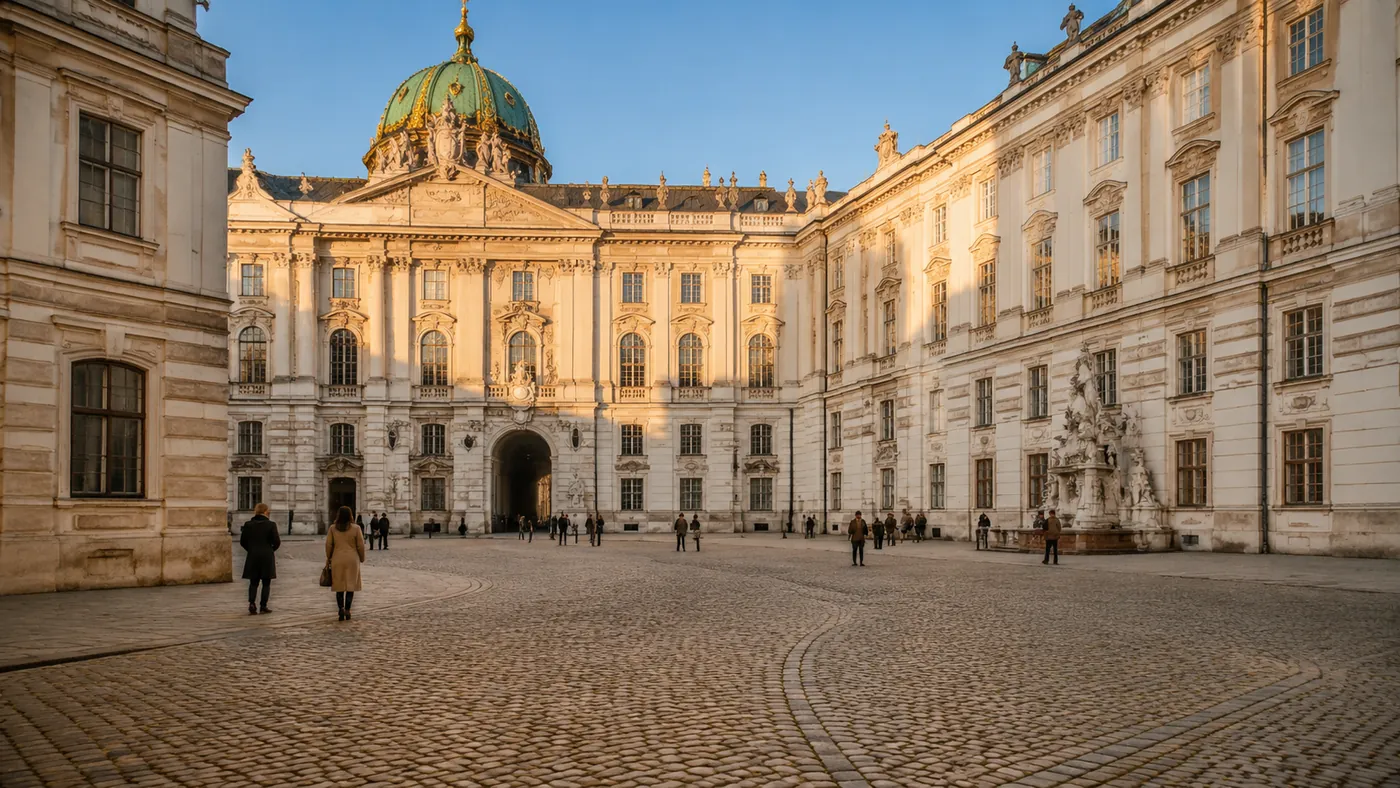
The Habsburgs kept both. The Hofburg is the winter residence — documented seat of government since 1279, and still a working one: the Austrian Federal President has his offices in the Leopoldine Wing, which is why parts of the complex are government building rather than museum. Schönbrunn is the summer residence, a 1,441-room baroque palace with large formal gardens, about five kilometres west of the center at the U4 Schönbrunn stop.
That difference shapes the visit. Schönbrunn is one estate you wander; the Hofburg is a dense city block of separate attractions, each with its own ticket at its own door. I have watched plenty of visitors buy the €20 gate ticket at the Michaelerkuppel, see the Imperial Apartments, and leave convinced they have “done the Hofburg” while the actual crowns sat unvisited two courtyards away.
Pick the Hofburg if…
…you care more about history than gardens. The Imperial Treasury holds the crowns; the Sisi Museum and Imperial Apartments cover roughly 24 rooms of how Franz Joseph and Elisabeth actually lived; the Spanish Riding School trains its Lipizzaners in a baroque hall you can watch for €17. All of it sits in the middle of the old town, so it slots into a normal city day without an excursion. My rundown of what you actually see inside covers each door, and the tour comparison tells you which ticket fits which visitor.
Pick Schönbrunn if…
…you want one grand set piece and time outdoors. The gardens are the point: on a good day you can spend as long outside the palace as in it, which no honest person says about the Hofburg’s courtyards. With children who need space to move, Schönbrunn is the easier morning. It is also the simpler purchase — one palace, one visit, no five-ticket puzzle.
The Marie Antoinette mix-up
I get asked about her at the Hofburg most weeks, so let me correct this once: Marie Antoinette grew up at Schönbrunn, not the Hofburg. If she is the reason for your visit, you want the summer palace.
Separate companies, separate tickets
The two palaces are run by different companies. Nothing transfers — no combined ticket, no discount for holding the other one. Whatever you read about a “Vienna palace pass”, budget for each separately. Hofburg entry starts at €17 for the Riding School’s morning exercise and €20 at the Michaelerkuppel gate; guided tours run €48–€52.
How to do both in one day
This is what I suggest to friends with a single free day. Start at the Hofburg when the Imperial Apartments open at 9:00 — the Michaelerkuppel queue is shortest then. Do the apartments and Sisi Museum, then the Treasury (skip Tuesday, when it is closed — see the opening hours page). After lunch, U3 from Herrengasse, change to the U4, out at Schönbrunn: about twenty minutes door to door. That leaves the whole afternoon for the summer palace and its gardens, with time to spare.
Frequently asked questions
Which is better, the Hofburg or Schönbrunn?
Neither, honestly — they do different jobs. Schönbrunn is one grand summer palace with big gardens; the Hofburg is the winter residence in the city center, with the crowns, the Sisi Museum and the Riding School behind five separate tickets. Gardens and one big circuit: Schönbrunn. Dense history in the old town: Hofburg.
Can you visit the Hofburg and Schönbrunn in one day?
Yes. They are about 20 minutes apart on the U3 and U4. Hofburg in the morning from 9:00, Schönbrunn after lunch. How long you need depends on how many of the Hofburg’s tickets you buy.
Did Marie Antoinette live at the Hofburg?
No — she grew up at Schönbrunn, the summer residence. The Hofburg’s famous resident is Empress Elisabeth, whose life the Sisi Museum covers in detail.
Do Hofburg tickets work at Schönbrunn?
No. Different companies, separate tickets, and nothing transfers between them. Within the Hofburg itself each attraction also sells its own ticket — there is no single “Hofburg ticket” either, which catches a lot of people out.